


About Town of Highland, NY

The Town of Highland was named for its hilly elevated terrain, lying north of the Delaware River. The river forms the southwest border of the town and Sullivan County. The town’s population was 2,530 at the 2010 census. The town was formed from the subdivision of the Town of Lumberland in 1853, which also created the westerly neighboring Town of Tusten. According to the US Census Bureau, the town has a total area of 51.7 square miles, of which, 50.0 square miles is land and 1.7 square miles is water surface.
On that southern border, Barryville is named for William T. Barry, postmaster general under President Andrew Jackson. The community grew up around the Delaware & Hudson Canal, which opened in 1828 and operated until 1898. The canal ran through what is today the center of the hamlet, and the canal company operated a number of stores, an office and a drydock there.
The Upper Delaware River, today a unit of the National Park system, then also served as the conduit for timber cut in the area and rafted to Philadelphia for use in the ship building industry. In 1899, John Willard Johnston, lawyer, historian, and the town of Highland’s first supervisor, wrote a first-hand, biting local history of the canal period, which was published as “Remiscences.”
Eldred, named for the hamlet’s first settler Charles Eldred, is at the town’s center and is the seat of town government. Two other hamlets include Highland Lake at the northeast and Yulan (Chinese for laurel) to the west. Early settlers here earned their living by farming and from harvesting the abundant timber. Late in the 19th Century, the nearby Erie Railroad brought vacation visitors and the creation of the boardinghouse industry, which has since evolved into recreation, camping, and second homes.
The Highland neighborhood of Minisink Ford is the home of the Delaware River Aqueduct for the former Delaware and Hudson Canal, a National Engineering Landmark, which was built in 1848 by Brooklyn Bridge builder John Roebling and is recognized as the world's oldest surviving wire rope cable suspension bridge.

Town of Highland, NY Property Listings
Click property titles or photos for more information and larger images.
| MULTI-FAMILY $1,195,000 - Historical Retreat and Functional Inn 24 Washington Lake Road Yulan, NY 12792 38 Bed | 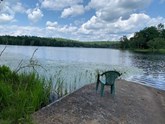 |
| SINGLE FAMILY PENDING $289,000 - Stretch Your Legs in this Ranch 69 Hartung Road Highland Lake, NY 12743 3 Bed / 2 Bath Size: 1,120 Sq. Ft. | 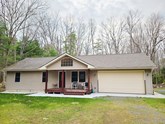 |
| SINGLE FAMILY SOLD! $269,000 - Is that a Yurt? 104 Yulan Barryville Road Barryville , NY 12719 2 Bed / 2 Bath Size: 980 Sq. Ft. | 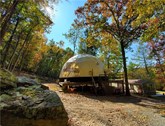 |
| SINGLE FAMILY SOLD! VIRTUAL TOUR $229,900 - Repurposed Highland 96 Eldred-Yulan Road Eldred, NY 12732 3 Bed / 2 Bath |  |
| SINGLE FAMILY SOLD! VIRTUAL TOUR $224,900 - The magic number is 111 111 Beaver Brook Road Yulan, NY 12792 3 Bed / 2 Bath Size: 1,600 Sq. Ft. |  |
| SINGLE FAMILY SOLD! VIRTUAL TOUR $179,900 - Sustainable Living! 793 State Route 55 Eldred, NY 12732 3 Bed / 1 Bath Size: 1,180 Sq. Ft. |  |
| SINGLE FAMILY SOLD! $164,500 - Sportsmen and Women Welcome! 1344 State Route 55 Eldred, NY 12732 3 Bed / 2 Bath Size: 1,864 Sq. Ft. |  |
| VACANT LAND SOLD! $139,000 - Beautiful Wooded Lot on 30.9 Acres Crawford Road Eldred, NY 12732 |  |
| SINGLE FAMILY SOLD! VIRTUAL TOUR $129,000 - Glory Day's! 28 Bodine Lake Road Yulan, NY 12792 4 Bed / 1 Bath / 1 Half bath Size: 1,500 Sq. Ft. |  |
| SINGLE FAMILY SOLD! $125,000 - Sportsman & Woman Welcome State Route 55 Eldred, NY 12732 2 Bed / 1 Bath Size: 700 Sq. Ft. |  |
| SINGLE FAMILY SOLD! $110,000 - Sportsmen and women wanted 1340 State Route 55 Highland, NY 12732 2 Bed / 1 Bath |  |
| SINGLE FAMILY SOLD! VIRTUAL TOUR $89,000 - My Country Get-a-way! 194 Eldred-Yulan Road 1 Eldred, NY 12732 2 Bed / 1 Bath Size: 300 Sq. Ft. |  |
| VACANT LAND SOLD! $79,900 - Beautiful Building Lot on 5.16A Mud Pond Road Highland Lake, NY 12743 | 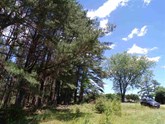 |
| MOBILE/MANUFACTURED SOLD! $69,000 - Amazing Mobile Home Getaway 13 Samyn Road Barryville, NY 12719 3 Bed / 2 Bath Size: 980 Sq. Ft. |  |
| SINGLE FAMILY SOLD! $69,000 - Mobile Home-Needs Some TLC 11 Samyn Road Barryville, NY 12719 Size: 840 Sq. Ft. | 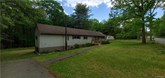 |
| SINGLE FAMILY SOLD! VIRTUAL TOUR $59,900 - Nature First Cottage Summit Eldred, NY 12732 Size: 300 Sq. Ft. |  |
| VACANT LAND SOLD! $44,900 - Great Building Lot Summit Drive Yulan, NY 12792 | 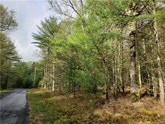 |
| VACANT LAND VIRTUAL TOUR $42,265 - Home is where you build your dreams! 36 Split Rock Drive Barryville , NY 12719 | 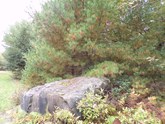 |
| VACANT LAND SOLD! $40,000 - 1.40 Acres in Eldred 58 Collins Road Eldred, NY 12732 |  |
| VACANT LAND SOLD! $17,777 - Build Your Dream Home! Eldred-Yulan Road Eldred, NY 12732 | 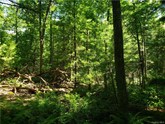 |

Contact Information
Diane Butler, New York License #10351209241 Licensed in New York and PennsylvaniaDiane C. Butler Real Estate
Jeffersonville , NY 12748
Send a message